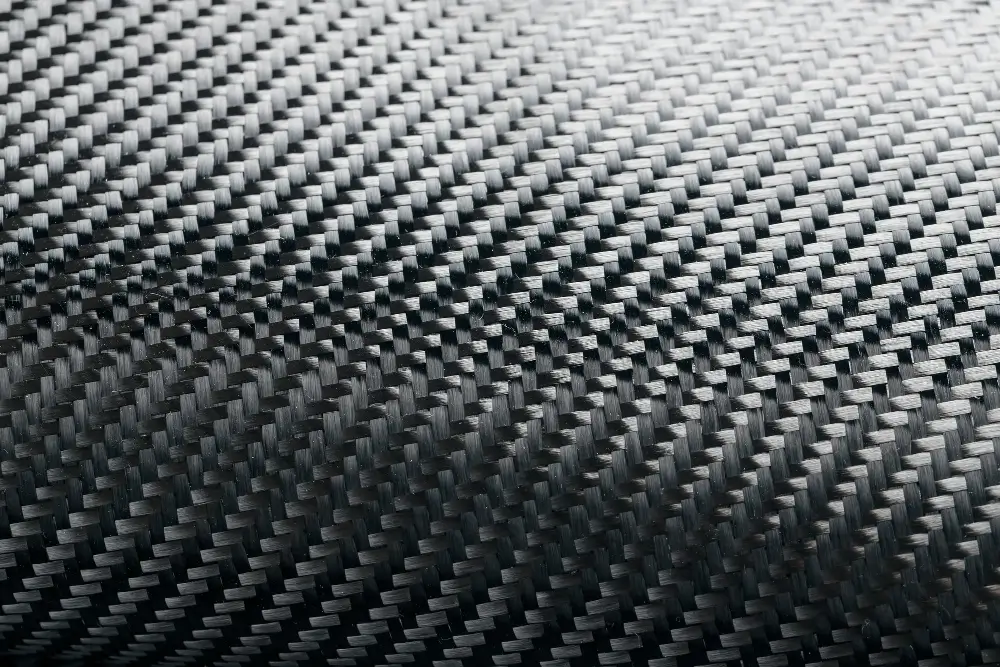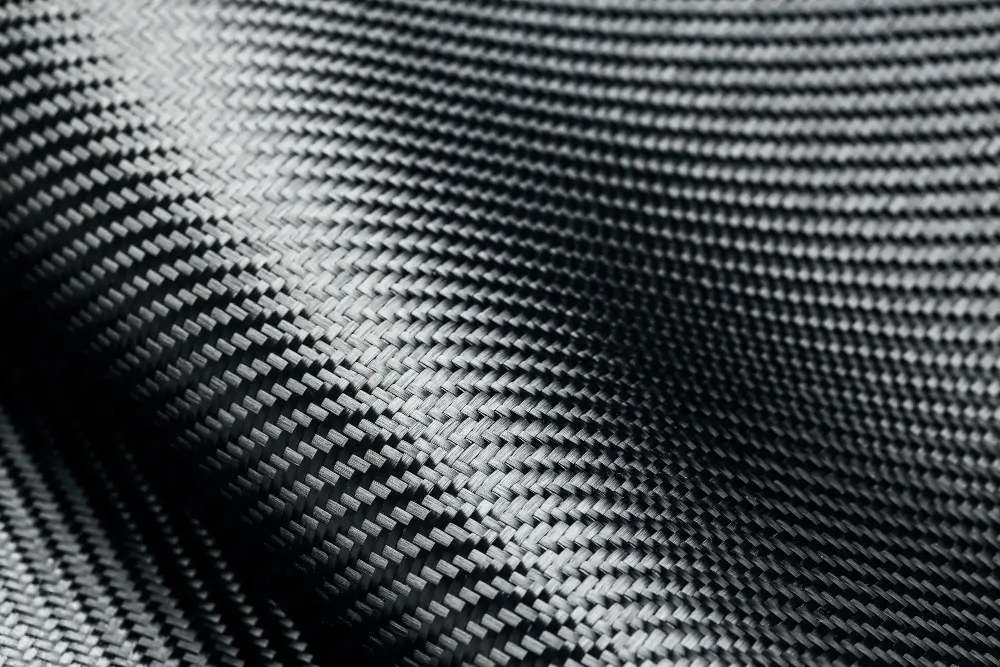
Carbon fiber components are used in high-performance manufacturing as they reduce weight, resist corrosion, and deliver strong stiffness-to-weight performance when the part is designed correctly.
Steel still earns its place because it is mature, predictable, and easy to machine, weld, thread, and repair. That is why carbon fiber vs steel should never be treated as a simple material ranking. The better question is how each material performs in a given application.
At AMC Composites, we compare the duty case before choosing the material. How strong is carbon fiber vs steel? The practical answer depends on part geometry, load path, stiffness target, interface design, production volume, and inspection requirements. Fiber orientation, laminate schedule, resin matrix, tooling, cure, trimming, and inspection all affect the final result.

Steel is isotropic, which means its properties are generally consistent in every direction. That makes steel straightforward to model, machine, weld, and inspect. A steel bracket or beam can carry a load through many paths without the same level of fiber-orientation planning.
Carbon fiber composites are directional. Fibers carry the highest loads when they are aligned with the main stress. Off-axis behavior depends on the laminate architecture, resin matrix, and how the plies work together.
A carbon fiber laminate can be extremely efficient in one direction and much less efficient in another if the layup is not designed for the actual load case. A carbon fiber wheel, bracket, housing, or structural cover only reaches its potential when the material and manufacturing route match the real application.
Carbon fiber strength vs steel becomes most interesting when the strength-to-weight ratio is the main driver. A properly designed carbon fiber composite can deliver high stiffness and strength with less mass than a comparable steel component. That matters in aerospace, racing, performance automotive, robotics, and any assembly where reduced weight improves speed, efficiency, handling, or payload.
The second advantage is load-path control. With steel, the geometry carries load through a uniform material. With carbon fiber, the laminate can be designed so that reinforcement follows the main stress directions. That gives engineers more control over where stiffness and strength are placed in the part.
Carbon fiber also performs well when corrosion is a concern. It does not rust like steel, which can be valuable in exposed assemblies, moisture-prone environments, and long-service components. The design still needs correct resin selection, sealed edges, protected inserts, and proper isolation where carbon fiber interfaces with metal hardware.
Steel remains strong in areas where carbon fiber needs more design support. It handles localized bearing, threaded features, clamp loads, and direct metal-to-metal interfaces well. A steel part can often accept bolts, welds, and field modifications with less planning than a composite part.
Steel also provides ductility. Under overload, it can yield, bend, or deform before failure. That behavior can be useful in structures where visible deformation is preferred over less obvious internal composite damage. Carbon fiber can be very strong, but its failure behavior is different and often requires inspection planning after impact or overload.

Manufacturing cost and repairability should be part of the material decision. Steel often has a lower material cost and is easier to weld, machine, thread, and repair in the field. Carbon fiber requires more design and process control, but it can reduce added weight and avoid some welding or bolting steps when the part is designed correctly.
A study published in Next Materials gives a practical example of this tradeoff. CFRP plate stiffeners increased the beam weight from 18.1 lb to 18.4 lb and raised load-carrying capacity from 13,500 lbf to 16,400 lbf. Steel stiffeners raised the weight to 19.7 lb and the load-carrying capacity to 18,200 lbf. Steel carried more load in that test, but CFRP added far less weight and avoided welded stiffeners. That is why cost and repair decisions should be tied to the duty case, not only to raw material price.
A useful steel vs carbon fiber comparison starts with how the part will be used. Carbon fiber and steel solve different design problems, so the right choice depends on load direction, weight target, interfaces, service environment, and production control.
For carbon fiber parts, performance is built through design and process control. AMC evaluates laminate architecture, tooling approach, trimming strategy, finishing needs, assembly requirements, and inspection criteria together. Our composite manufacturing services are structured around that full path from material selection to finished component.

Carbon fiber performance is built into the part step by step. Fiber direction, resin behavior, consolidation, trimming, drilling, and assembly all decide whether the finished component carries load the way the design intended.
Fiber orientation is the first control point. Carbon fiber carries load most efficiently along the fiber direction, so the laminate schedule has to match the actual load case.
A structural carbon fiber part may need plies in multiple directions to handle bending, torsion, impact, and clamp-up loads. A simple directional laminate may perform well in one axis but lose efficiency when the real assembly loads it from another direction.
The best laminate schedule is the one that matches the duty case, geometry, and interfaces of the finished part.
The resin matrix supports the fibers, transfers shear between layers, and helps protect the laminate from environmental and handling damage. If the resin system is not matched to the application, the part can lose durability even when the fiber selection is correct.
Consolidation quality also matters. Voids, dry areas, resin-rich zones, and poor fiber wet-out create variation in strength and stiffness. A carbon fiber component is only repeatable when the process controls fiber placement, resin content, cure, and compaction together.
Post-mold steps affect structural performance. Trimming defines final edges. Drilling creates holes and fastener interfaces. Assembly introduces clamp loads, inserts, bonding surfaces, and alignment requirements.
For steel, these operations are often more forgiving. For carbon fiber, they need to be planned as part of the design. Poor edge quality, uncontrolled drilling, or unsupported inserts can create local weakness even in a well-cured laminate.
Carbon fiber is the better choice when weight reduction creates measurable value, and the load path can be designed into the laminate. This is common in carbon fiber wheels, racing components, aerospace parts, robotics, structural covers, and custom carbon fiber parts, where every pound affects performance.
Carbon fiber is also a strong candidate when stiffness-to-weight matters more than raw material cost. A well-designed composite part can place reinforcement where the structure needs it most instead of carrying unnecessary mass through the entire geometry.
Choose carbon fiber when:
Carbon fiber is selected when the design and manufacturing route can turn directional performance into a repeatable part.

Steel may be the better choice when the part needs high local bearing strength, threaded features, weldability, or rough field repair. It can also be the simpler route when weight is not the main constraint.
Steel is more forgiving in many interface-heavy designs. Bolts, welds, direct clamp loads, and localized contact are often easier to manage in metal. Steel can also deform before failure, which may be useful when visible yielding is preferred over hidden internal damage.
In demanding production setups, steel tools can provide long-term stability, while aluminum or composite tools may fit lower volumes, different cure windows, or development-stage programs.
The material decision should include cost, service environment, inspection access, and expected abuse. If the part will be modified in the field, repaired quickly, or loaded in unpredictable ways, steel may still be the practical material.
At AMC Composites, material selection is part of the full production plan. We look at the part requirement first, then connect design, material choice, tooling, manufacturing route, finishing, assembly, and inspection into one end-to-end workflow.
Our Design for Manufacturability process helps identify whether carbon fiber is a strong fit or whether steel, aluminum, or a hybrid approach makes more sense. We look at part complexity, ease of assembly, material selection, and process optimization before tooling decisions are locked.
Our in-house design and development capabilities support CAD modeling, structural review, reverse engineering, 3D scanning, metrology, and prototype validation. That helps teams compare options on real geometry instead of broad material assumptions.
When carbon fiber is the right path, AMC can support the full production chain:

Use this checklist before choosing a material route:
Carbon fiber can outperform steel when weight reduction, stiffness-to-weight performance, corrosion resistance, and directional load control matter. Steel remains strong when the design needs ductility, direct fastener strength, weldability, field repair, or lower material cost.
The real answer depends on the part. A carbon fiber laminate only wins when the architecture, load path, resin system, process control, trimming, and inspection are aligned with the duty case.
Contact AMC Composites to review your print and compare the duty case. We can help define whether carbon fiber, steel, or a hybrid approach best supports the required strength, weight, geometry, and production plan.
.webp)